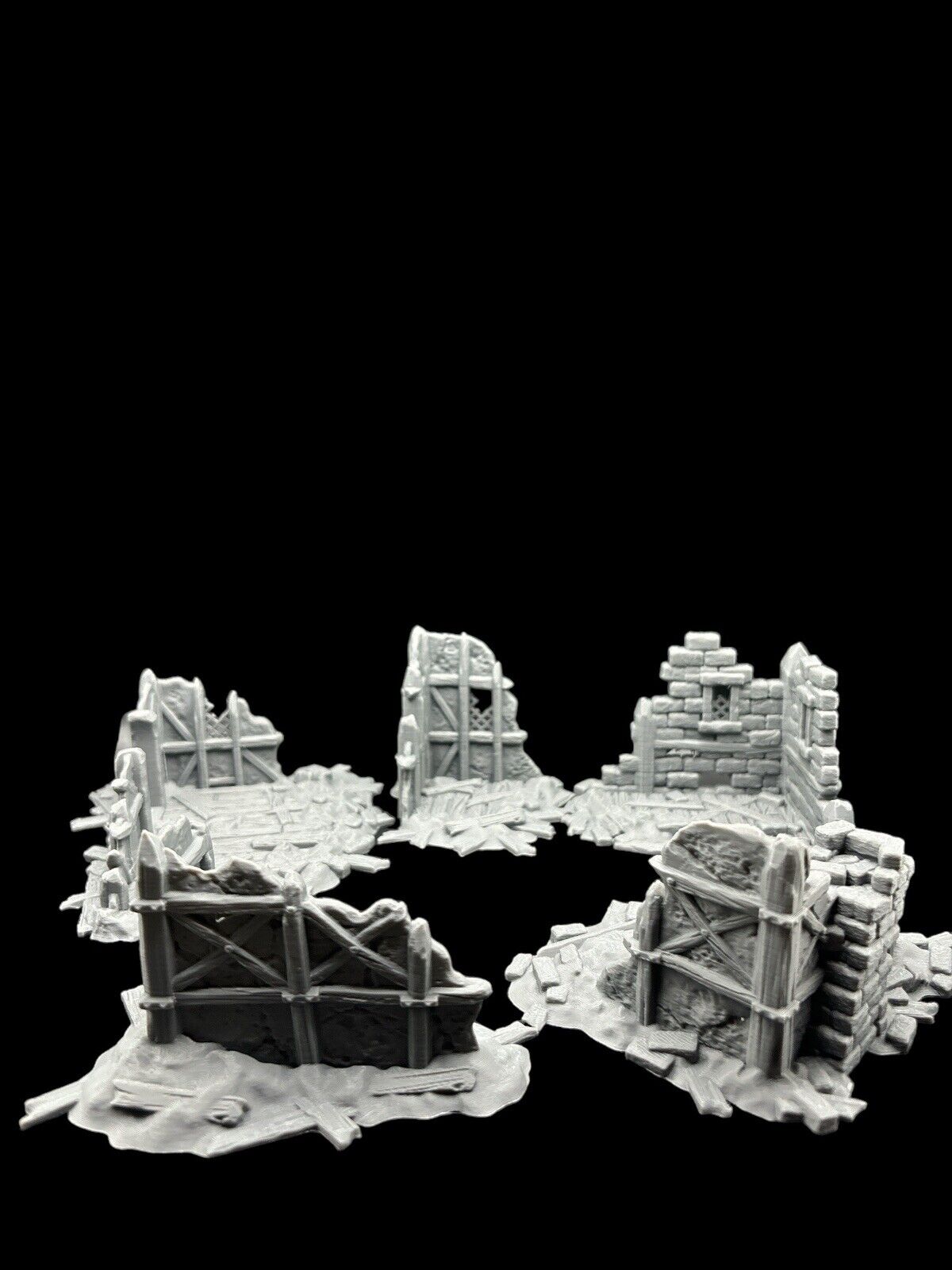
Every week we scan hobby chats, event packs and table photos to find what is actually helping games play better right now. This week’s consensus: add a little more vertical line of sight blocking, smooth out traffic lanes, and keep the setup fast. You do not need to rebuild your board. A few smart swaps will do the work.
1) Trade a scatter cluster for one tall ruin
Multiple small bits look cool, but they rarely stop a knight, monster or battleline brick from seeing half the table. Replace one low scatter cluster with a single, taller footprint that still lets units move through cleanly.
- Pick pieces with broken floors and windows for partial lanes and interesting angles.
- Keep the base modest so you are not eating too much real estate.
- Place it a third of the way in from a board edge to break up long fire lanes.
Good fits from our range:
- 28mm Building Ruins Terrain Scenery for a classic centerpiece ruin that plays fast.
- Ruined Church 28mm Terrain when you want height and interior play.
- Elven Watchtower 28mm Terrain for vertical variety on fantasy or skirmish boards.
2) Convert a dead zone into a movement lane
If your middle is a parking lot, push some bulk to the flanks and carve a clean lane that rewards positioning rather than raw speed.
- Angle ruins so doorways point into the lane, not block it.
- Place craters or low rubble along the edges to slow side routes while keeping the main lane brisk.
- Mirror the idea on both halves of the table for fairness.
Plug and play pieces:
- 4x 28mm Craters to texture lane edges without killing flow.
- Scatter Ruins 28mm for light cover that guides paths.
- 28mm Wall Ruins, 6 Pcs to frame the lane and block side shots.
3) Frame a flank with purposeful scatter
Stacks, barrels and broken fencing can make a flank matter. They create micro-decisions without stalling the game.
- Place small clusters 6–9 inches from the corner to pull skirmish units wide.
- Leave fingertip gaps so bases glide through.
- Vary height a little. A knee-high obstacle next to a chest-high wall is perfect.
Reliable workhorses:
- 20x Barrels 28mm Scatter for instant objective dressing and flank texture.
- Rubble Barricades 28mm to add believable cover that drops in anywhere.
- Palisade Set 28mm when your scenario wants a fortified edge.
Speed paint your upgrades tonight
Keep the recipe simple so the pieces hit the table by the weekend.
- Prime: black or dark brown.
- Base: a mid grey for stone or a desaturated tan for wood.
- Drybrush: two quick passes, lighter each time.
- Pop: pick one accent plank or door with a muted colour.
- Grime: controlled streaks around windows and doors with a thin wash.
For ruins, stipple a little mid grey on edges, then feather with a lighter drybrush. For wood, drag your brush with the grain so texture shows. Our prints ship unpainted and ready to prime, which makes this fast workflow easy.
Drop-in examples from our studio shelf
Here are three pieces we have been reaching for when a table needs vertical LoS and clear lanes in a hurry.


Test your layout in five minutes
Before game night, drop your terrain on a mat and run this checklist:
- Stand at each corner. Can you see clear, unfair fire lanes across the long edge? If yes, rotate one tall ruin a quarter turn.
- Measure two or three movement routes between deployment zones. At least one should feel brisk, one should be contested, and one should be sneaky.
- Place two objectives by a lane edge. Make sure a single tall piece can influence them without locking them down.
- Walk a monster or vehicle base through the center. If it snags, slide a wall ruin back one inch.
Ready to upgrade a table fast?
Start with one tall ruin and one lane kit. The mix below covers most systems without clutter:
Need more ideas for your board style, from grimdark city to frozen pass to market brawl? Browse everything in one place: the full terrain collection.