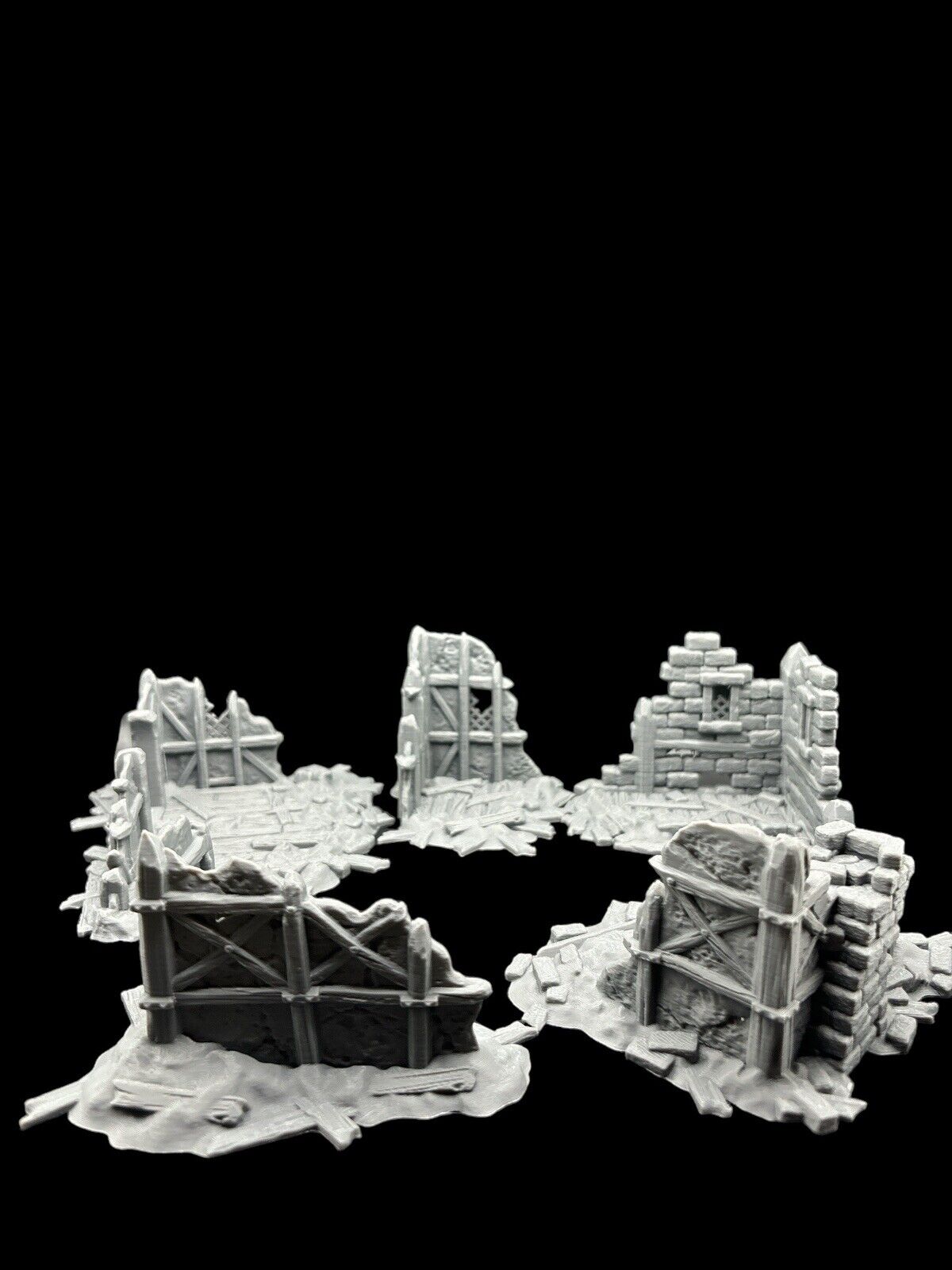
Oil wash weathering is having a moment this week. If you have an hour and a few basic supplies, you can push your table from flat to filmic with rich shadows, stained stone and believable grime. This is the exact, repeatable one-hour method we have been using on ruins, craters and common scatter.
Why everyone is oil washing this week
Three reasons. First, oils level beautifully, so they fall into recesses and create instant depth without tide marks. Second, you get long working time, which means stress-free corrections. Third, the effect stacks perfectly over zenithal or slapchop style basecoats. If you primed last weekend, you are already halfway there.
What you need, nothing exotic
- Artist oil paint: raw umber, Payne’s grey, burnt sienna. Any reliable brand works.
- Odourless thinner or white spirit, plus a dropper bottle for easy mixing.
- Makeup sponge and a couple of soft size 4 to 8 brushes.
- Paper towels and cotton buds for clean edges and streaks.
- Optional matte varnish to lock things down at the end.
Pick a test piece. Ruins are perfect. The 28mm Building Ruins has broken lintels, cracked render and lots of stone texture that loves an oil wash. Craters are ideal for quick wins too, and the 4x 28mm Craters set covers a whole board corner in one pass. For ready-made cover, add fast scatter like Rubble Barricades.
All prints ship unpainted and ready to prime.
The 60-minute method, step by step
- Base in brights, then mute: Over your black or grey prime, mist a light zenithal. Block stone with a warm grey, timber with a desaturated brown and metal plates with a mid silver. Do not chase perfection. This is a map for the oils to read.
- Gloss touch for flow: If you have it, spray or brush a thin satin or semi-gloss coat. Oils run smoother over a slightly slick surface, which prevents staining on high spots.
- Mix the wash: On a tile, place a pea of raw umber and a half pea of Payne’s grey. Thin to a milk consistency. You want it translucent, not coffee-thick sludge.
- Flood the recesses: Load a soft brush and tap the wash into cracks, stone joints, crater lips and undercuts. Capillary action will do the work. Do not paint the whole surface like ink.
- Feather and erase: After five minutes, use a barely damp makeup sponge to pull back the wash from flats and edges, leaving it in lines and pits. Roll the sponge, do not scrub.
- Rust and earth accents: Dot tiny specks of burnt sienna where water would sit, like nail heads or broken rebar. Feather downward with thinner for subtle streaks.
- Grime glaze: With the leftover wash, make a thinner mix and glaze into traffic areas, door thresholds and crater basins. This tints without killing highlights.
- Dry time reality check: Oils stay workable for a while. If you need to sharpen an edge or reopen a highlight, touch a clean brush with thinner and lift.
Speed recipes for common pieces
- Urban ruins: Warm grey base, raw umber heavy in the joints, Payne’s grey in blasted pockets. Edge pop with a quick light grey drybrush after the oils set. Try it on the 28mm Building Ruins or mix in modular walls like 28mm Wall Ruins 6 Pcs for flexible footprints.
- Fresh craters: Khaki base with dark brown lip. Use a 70:30 raw umber to Payne’s grey wash. While damp, stipple in soot around the rim. The 4x 28mm Craters set makes an instant no-man’s-land.
- Scatter cover: Mixed rubble reads best with tonal variety. Base stones in three greys, wood in two browns, then unify with one umber wash. The Rubble Barricades pair well with simple barrels like 20x Barrels Scatter to dress alleys and courtyards.
- Natural rock: Start with a cool grey, glaze thin Payne’s grey into shadow shelves and a touch of raw umber on dirt-contact points. A fast drybrush of pale stone ties it together. The Rocky Outcrops are perfect for this recipe.
Keep it tidy and durable
- Work in batches: Rotate pieces so one is curing while you wash the next. You will cover a table’s worth in an evening.
- Edge control: If oil creeps where you do not want it, a cotton bud with a touch of thinner erases it cleanly. Always roll away from edges.
- Seal when touch-dry: Once the surface sheen has flattened, hit it with a matte varnish. This locks in pigment and kills any residual gloss.
Pick a project and go
If you want a fast centrepiece, the Basilica Ruins gives dramatic arches and broken nave lines that take a wash beautifully. For compact skirmish boards, stack sightlines with 28mm Wall Ruins 6 Pcs, then break up fire lanes with a few 20x Barrels Scatter. If you like vertical play, add a tall line-of-sight blocker such as the Watchtower, then roughen the base with the 4x 28mm Craters for contested ground.
Browse more options and build your board your way at our full collection.


